Inventory Replenishment Software: Forecast Demand and Automate Purchase Orders
 Alice Winston

Most brands that run out of stock aren’t ignoring their inventory. They check it every week. The problem is that the reorder math lives in a spreadsheet someone updates once a month, and sales don’t wait for the update.
Indexos is inventory replenishment software for brands selling on Amazon, Shopify, Walmart and TikTok Shop. It forecasts demand per SKU, tells you when to reorder and how much, and drafts the purchase orders for you to approve. Below we walk through how it works, formulas included, so you can check the numbers against your own catalog.
What replenishment software does that an inventory tracker doesn’t
An inventory tracker tells you how many units you have. To reorder well you need more than that: the date you have to place the order, the right quantity, and whether you can pay for it this month.
Miss the date and you stock out. On Amazon that means lost sales,ads running to an unavailable listing, and a ranking you’ll spend weeks earning back. Overshoot the quantity and the cash sits in a warehouse, paying storage fees until you discount the product to move it.
Sales and stock from every channel in one place
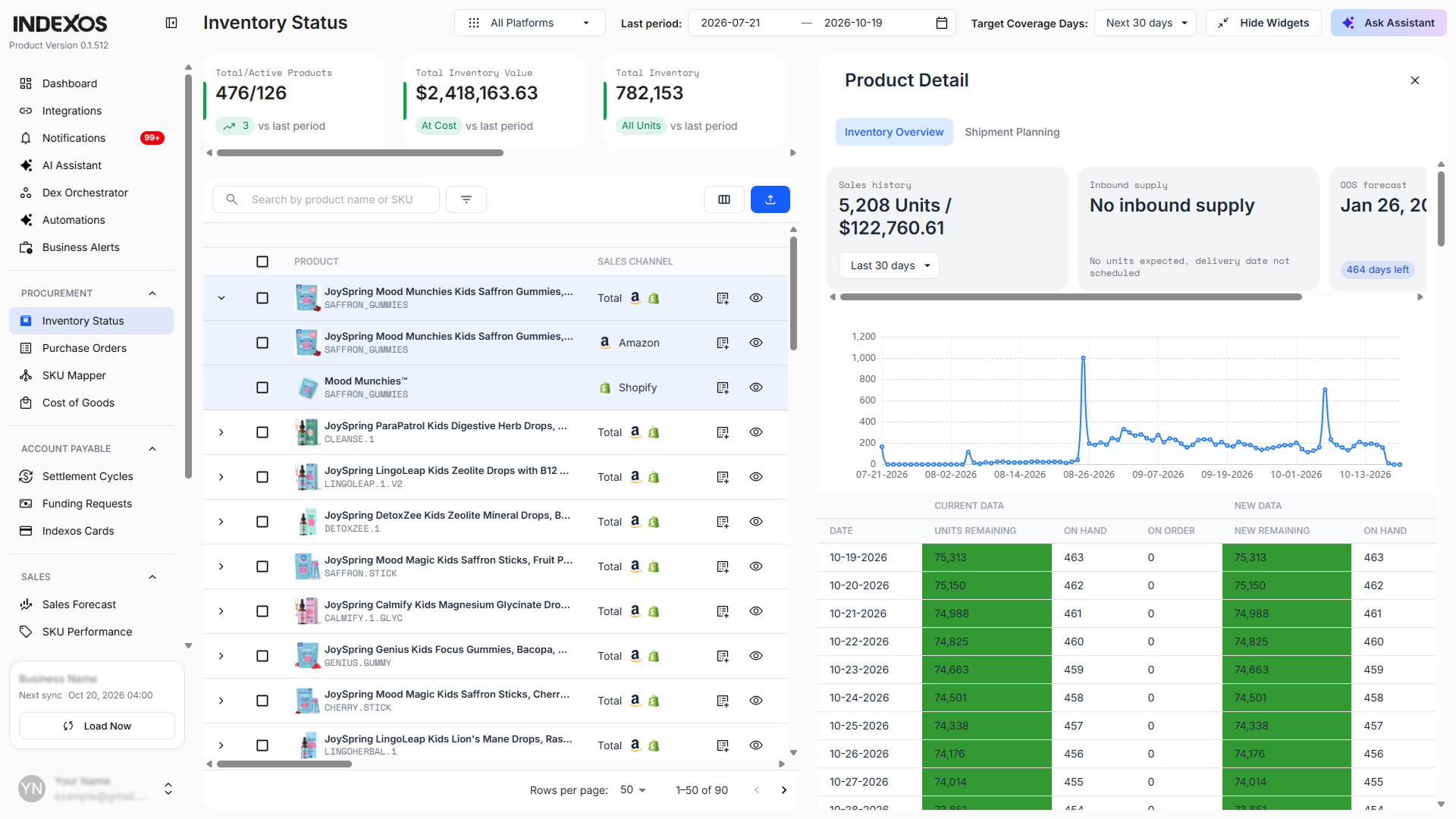
The forecast can only be as good as the data feeding it. Indexos connects to Amazon (FBA and AWD included), Shopify, Walmart Marketplace and TikTok Shop and syncs sales and stock several times a day.
It also maps SKUs across channels. If one product is listed as three different SKUs on Amazon, Shopify and TikTok Shop, Indexos treats it as one product with one demand number.
That matters more than it sounds. Say a product sells 40 units a day on Amazon, 25 on Shopify and 10 on TikTok Shop. Plan from your Amazon report alone and you’ll order for 40 a day when you actually sell 75. (More on this in the secret life of multi-platform sellers.)
Demand forecasting for each SKU
Indexos forecasts daily sales for every product using its sales history, recent velocity, seasonality and trend. New sales feed into the forecast as they sync, so if a product speeds up, you see it that week rather than at month-end.
Here’s how fast that can go wrong. You have 2,000 units and sell 50a day, so roughly 40 days of stock. Sales climb to 75 a day and you’re down to about 27 days. If your supplier needs 30 days, you were already late on the day sales picked up.
You can also check forecast accuracy for each SKU in Indexos. Some products are easy to predict and some aren’t, and it helps to know which is which before you place a big order.
Reorder point: when to place the order
The reorder point is the stock level where you need to order, so the new batch lands before the old one runs out:
Reorder point = (average daily sales × lead time in days) + safetystock
Safety stock covers the things you can’t plan for: a spike in demand, a supplier who ships a week late. Indexos includes it in the reorder point for each SKU.
Example: you sell 100 units a day, your supplier takes 20 days from order to sellable stock, and you keep a week of safety stock (700 units). There order point is 100 × 20 + 700 = 2,700 units.
Now look at it from the shelf. With 3,000 units on hand, it feels like a month of stock. In fact you have 3 days left to place the order.
Indexos calculates this for every SKU with your actual supplier lead times and sends an alert before a product hits its reorder point.
Order quantity: how much to buy
A lot of teams reorder a fixed amount, like “4,000 units, same as last time”. That number doesn’t know what’s already on the shelf or on the water. Indexos works the quantity out from demand instead:
Order quantity = forecast demand for (lead time + coverage period) +safety stock − stock on hand − stock on order
Same product as above. You want the new batch to cover 45 days afterit arrives:
The habitual 4,000-unit order would have bought 800 units you didn’t need yet.
Purchase orderautomation
Plenty of inventory forecasting software will give you a recommended quantity. You still have to turn it into purchase orders yourself.
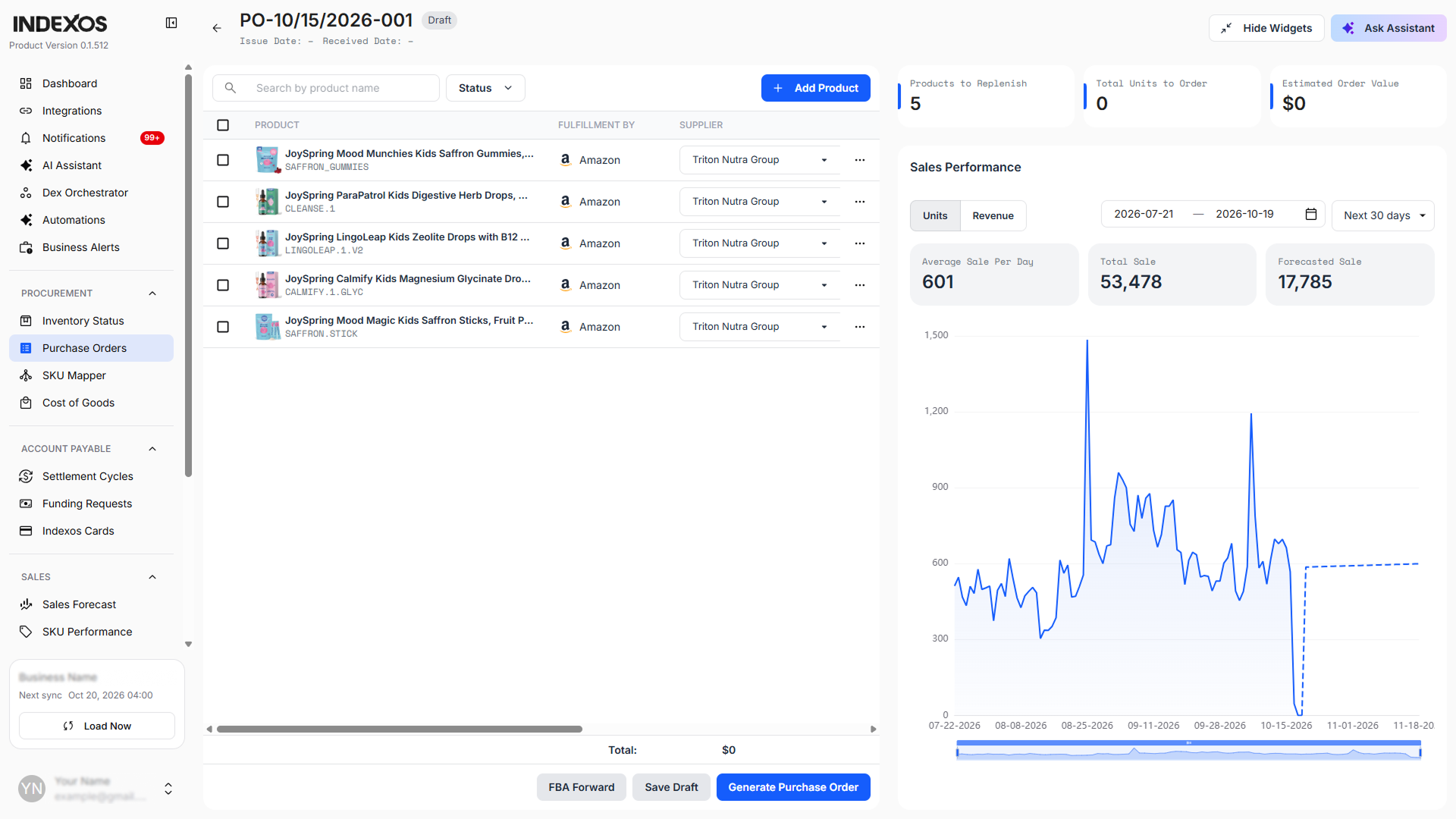
Indexos does that step too. It collects the SKUs that need reordering, groups them by supplier into a replenishment plan, and drafts a PO for each supplier. You go through the drafts, change quantities if you disagree, and approve. Until you approve, a PO stays a draft.
If you manage a few hundred SKUs across several suppliers, that’s the part of the week usually spent exporting reports and copying numbers into PO templates.
Cash impact before you approve
A large PO can leave you short on cash for ads or the next production run. Before you approve one, Indexos shows how it affects your cash position. It also shows which products have the most money tied up in slow-moving stock, and where you could free some of it up. If cash is the bottleneck, read how to know when you can afford to reorder inventory. Eligible businesses can also use the Indexos Card to payfor inventory.
Fewer stockouts without more overstock
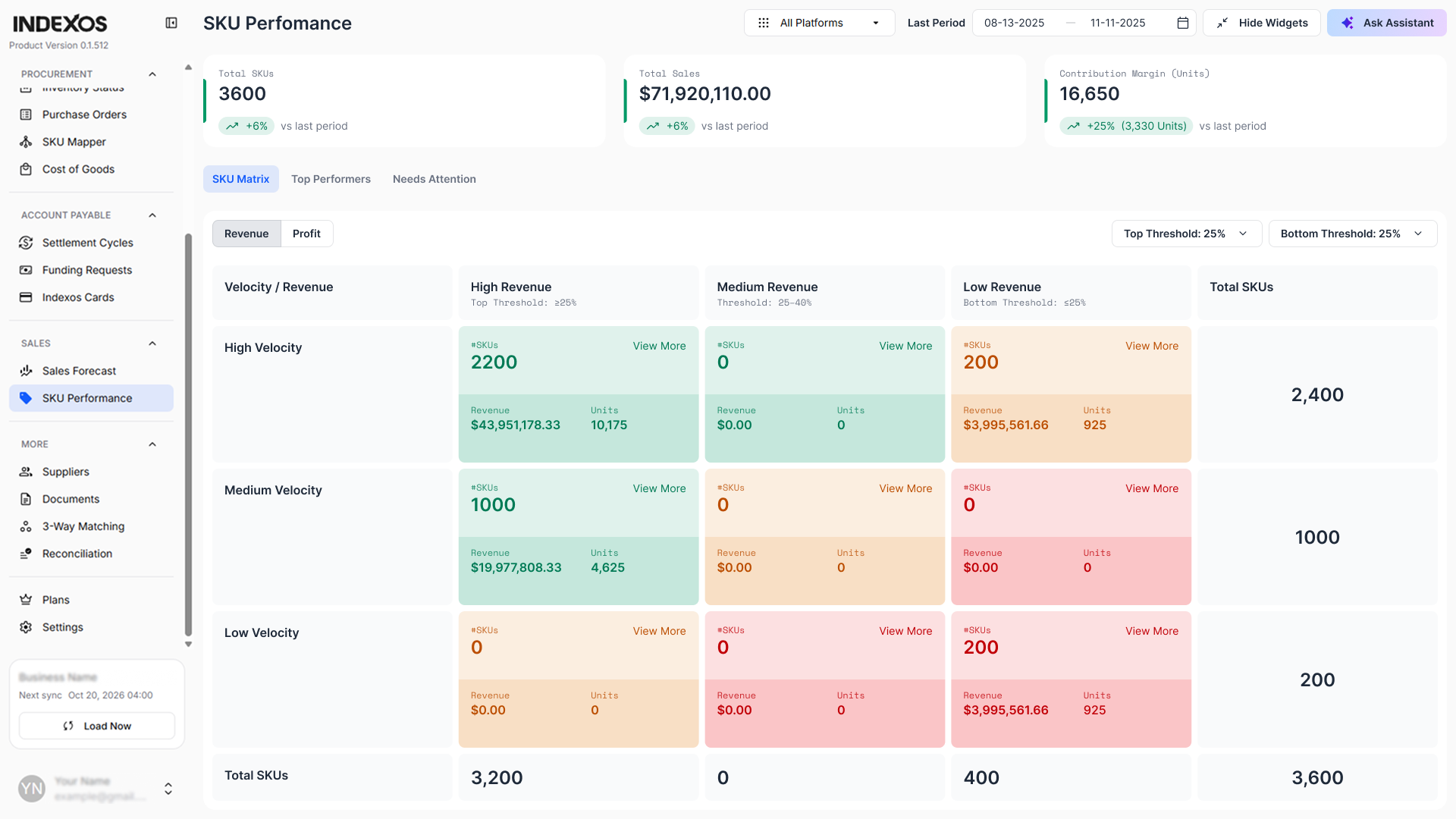
The easy fix for stockouts is to order earlier and order more. It works until you count the overstock. Indexos looks at both sides: it warns you about fast movers before they run out, and it flags slow movers and excess stock so you don’t keep reordering them out of habit. You can dig into which products earn their shelf space with SKU performance analytics.
Indexos vs. spreadsheets
FAQ
What is inventory replenishment software?
It tells you when to reorder each product and how much to order, based on forecast demand, stock onhand, stock on order and supplier lead times. Some tools, Indexos included, also draft the purchase orders.
How do you calculate a reorder point?
Multiply average daily sales by the supplier lead time in days, then add safety stock. At 100 units aday, a 20-day lead time and 700 units of safety stock, you reorder at 2,700units.
Does Indexos create purchase orders automatically?
It drafts them, grouped by supplier. Nothing is final until you review and approve it.
Which sales channels does Indexos work with?
Amazon (including FBA and AWD), Shopify, Walmart Marketplace and TikTok Shop.
Will I never run out of stock again?
No tool can promise that. A supplier can ship late, a product can go viral overnight, inventory countscan be wrong. Replenishment software catches the stockouts you could have seen coming, early enough to do something about them.
See your own reorder points
Connect your store and Indexos will show reorder points, stockout risks and draft purchase orders for your actual catalog.
Table of contents
Latest News & Insights
Discover our latest insights on smart inventory management, sales forecasting, and business financing.
Claude Connector for Ecommerce Inventory Management
The Indexos connector gives Claude your inventory, purchase orders and cashacross Amazon, Shopify, TikTok Shop and Walmart. Ask what to reorder andafford.

Meet Dex: The Active AI Copilot That Works While You Run Your Business
Discover Dex, the active AI copilot that monitors your eCommerce business 24/7 and helps you optimize inventory, purchasing, forecasting, and cash flow.


Amazon DD+7 Explained: How Sellers Stay Cash Flow Positive
Learn how Amazon DD+7 payouts impact cash flow, inventory planning, and growth. Discover strategies and tools to stay cash flow positive.

Amazon's DD+7 solved with the zero-interest Indexos Card
Beat Amazon DD+7 payout delays with the zero-interest Indexos Card. Access your earned funds early, improve cash flow, and scale your Amazon business faster.

Indexos: The Ultimate Growth Platform for New Amazon, TikTok Shop, Shopify, and Walmart Sellers
All-in-one platform for Amazon, TikTok Shop, Shopify, and Walmart sellers. Indexos automates COGS, forecasting, and purchase orders to boost growth.
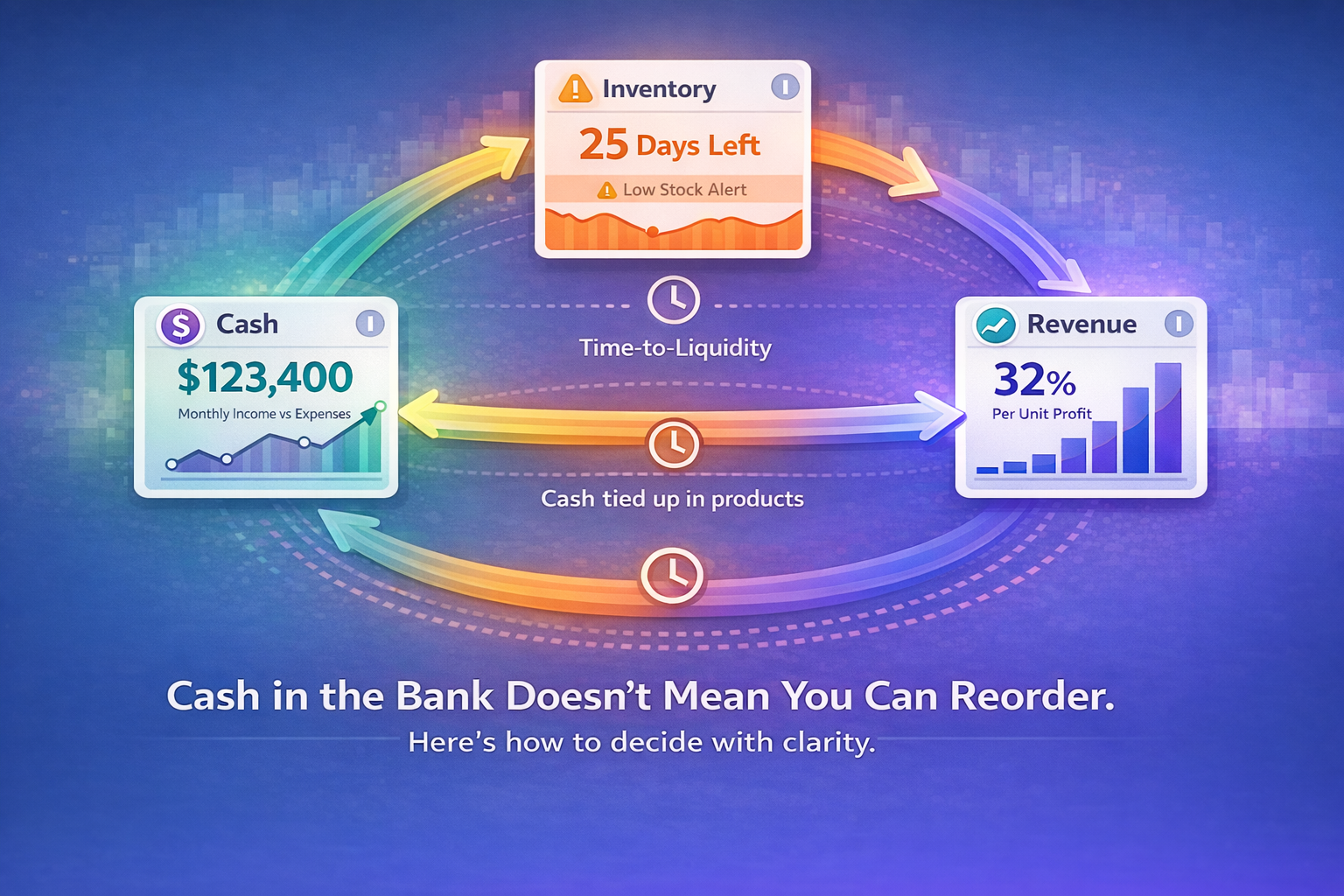
How to Know When You Can Afford to Reorder Inventory
Learn when to reorder inventory to protect cash flow, optimize stock levels, and drive eCommerce growth. Make data-driven inventory decisions with confidence.


Are You Ready to Talk to Your Business?
Indexos helps business owners talk to their business using AI. Turn data into clear answers, identify problems early, and make smarter decisions with confidence.

The Secret Life of Multi-Platform Sellers
Selling on multiple marketplaces? Stop juggling dashboards and spreadsheets. See how Indexos unifies inventory, forecasting, POs, and profits.

The Future of eCommerce Operations: Smarter, Simpler, Indexos
Indexos simplifies eCommerce growth with unified analytics, inventory management, and predictive forecasting - giving sellers clarity, control, and scalability.

Why Data Driven Sellers Sleep Better at Night
Indexos helps eCommerce sellers make smarter, data-driven decisions with real-time analytics, sales forecasting, and inventory insights in one platform.
Your SKUs Are Talking Behind Your Back: Are You Listening?
Unlock your SKU data’s hidden insights. Discover how Indexos helps sellers turn inventory chaos into profit-driven clarity